%201.avif)
Hurricane-Proof Fences: What Actually Survives Gulf Coast Storms
No fence is hurricane-proof. Some are hurricane-ready. The materials, post depths, and hardware that decide which fences are still standing in September.

Let's retire a phrase: there is no hurricane-proof fence. There are fences that are still standing after a Gulf storm and fences that are in the neighbor's pool. The difference is rarely the material on the brochure. It's what's underground, and what's holding the pieces together.
After 40+ years of building and repairing fences on the Texas Gulf Coast, here's what we've watched survive.
What wind actually does to a fence
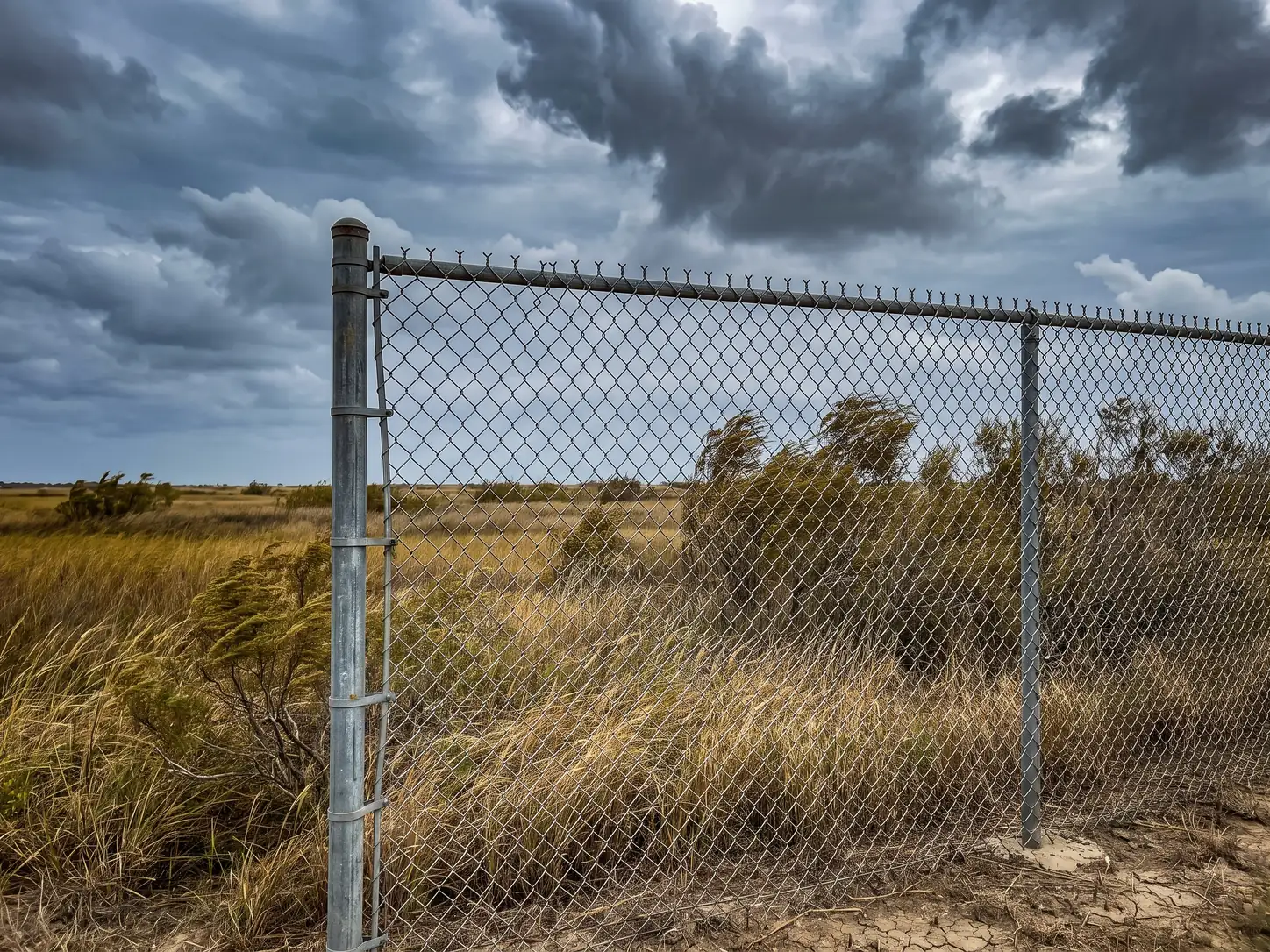
Wind doesn't push a fence over like a wall. It works it: thousands of load cycles that loosen fasteners, rock posts in wet soil, and turn small gaps into leverage. Solid-panel fences catch the most load. Then the ground gives before the wood does: saturated clay lets posts tilt, and once a run leans, the wind has a handle.
Materials, ranked for storm country
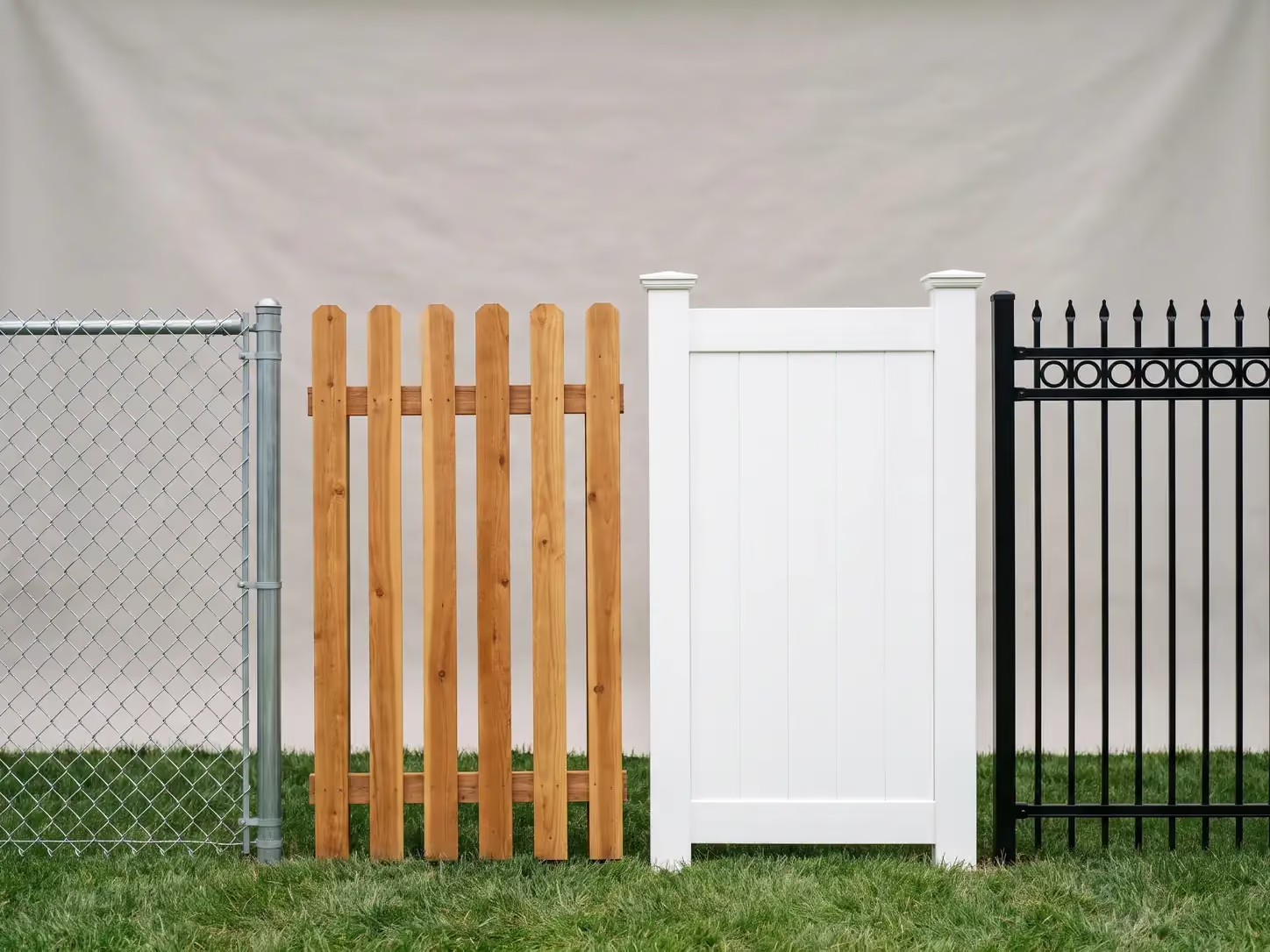
Chain link is the quiet champion because wind passes straight through it. Wrought iron is close behind for the same reason, with strength to spare. Wood and vinyl privacy fences catch the most wind, which doesn't disqualify them. It just moves the burden to construction. A board-on-board cedar fence on deep posts with hurricane-grade hardware outlasts a poorly set anything.
The parts that matter more than material
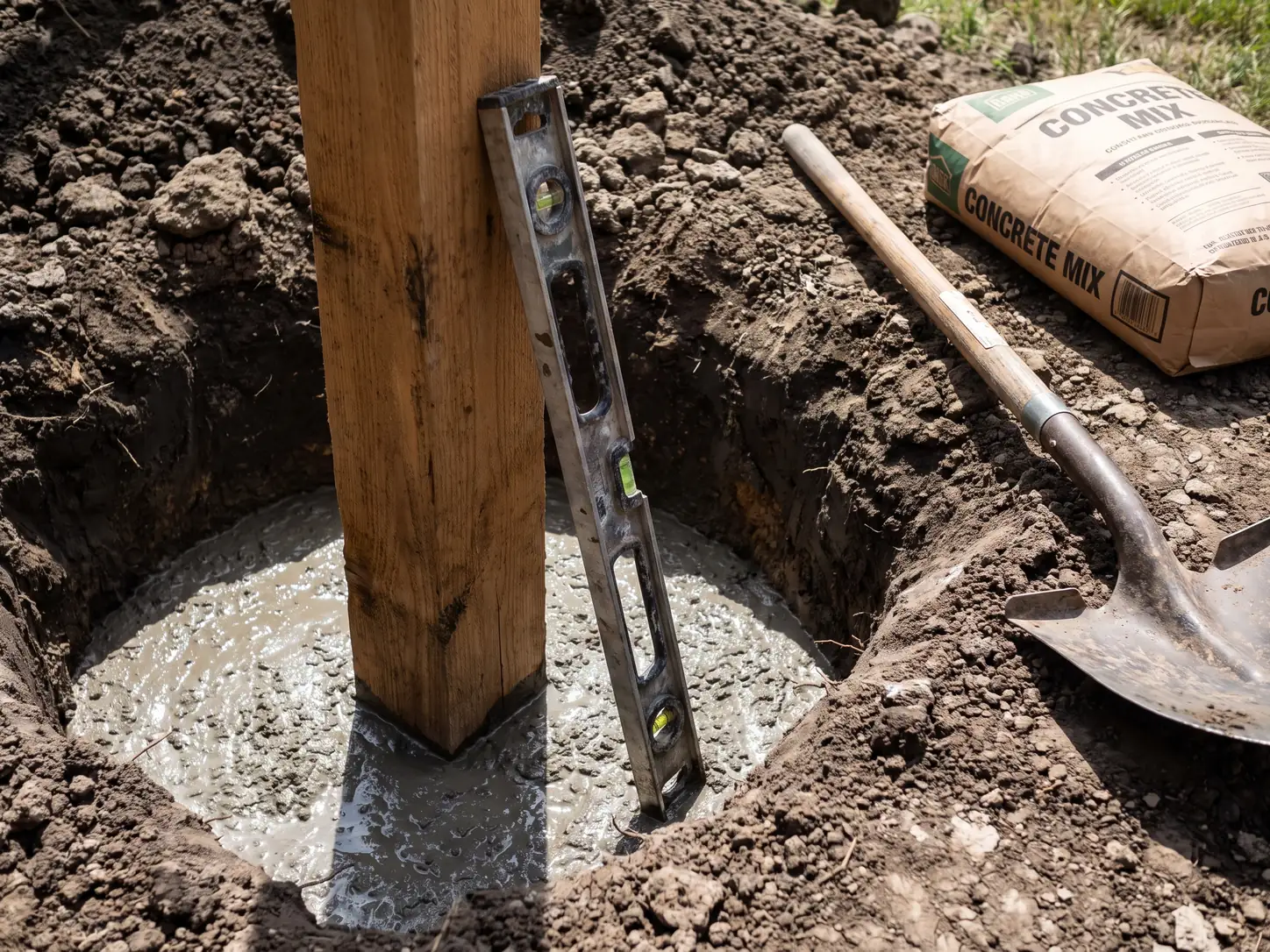
Post depth first: on this coast, posts belong below the soil movement zone, bedded in concrete sized for wind load, not the minimum the calculator allows. Hardware second: galvanized or stainless fasteners, heavy hangers, and gate hinges that don't become the weak link. Bracing third: corners and long runs need it, because that's where load concentrates. None of this photographs well. All of it decides September.
Before the season: get the fence checked
A pre-season inspection catches the cheap fixes: a loosening post, a rusting hinge, a panel starting to walk. We reinforce sound fences with bracing, reset weak posts, and swap in hurricane-grade hardware as part of our fence repair and storm-preparedness service. The best time is before the first storm has a name; the schedule agrees.
After the storm
If the storm wins a round: storm damage gets priority scheduling, and during hurricane season we run limited after-hours service. Leaning is fixable. Waiting makes it less so. Request a free estimate or call 409-939-6607. We reply within 24 hours on business days, faster when the weather's been loud.
Featured Fence Project
See how we’ve helped Texas families protect their homes with fences built for strength, style, and storm resistance.